Ophthalmology billing company serving practices in all 50 states

Ophthalmology Billing Services for Eye Care Practices Across the United States

RCM Xpert provides ophthalmology billing services for practices in all 50 states, covering eye visit and E/M coding, cataract and retina claims, medical and vision plan billing, denial follow-up and payment posting.

Your practice bills two visit code families, two kinds of payer and procedures that carry their own global periods. The Free Billing Audit reviews where your eye care claims lose payment.

Get a Free Billing Audit

Or call 740-766-6083

Patient covering one eye during a vision exam at an eye care practice

Ophthalmology Billing Services for Every Practice Setting

RCM Xpert bills eye care wherever it is delivered: general ophthalmology practices, retina and cataract groups, ambulatory surgery centers, hospital outpatient departments and multi-location eye groups. Each subspecialty carries its own coding risk, so each is handled on its own terms.

Ophthalmic technician adjusting a phoropter for a patient

General Ophthalmology and Comprehensive Eye Care

Every visit starts with a choice between an eye visit code and an E/M code, and the choice rests on the documentation and the plan. RCM Xpert applies the code family the note and the plan support and keeps refraction and routine services separate from medical care.

Retina Practices

Retina claims stack a visit, an injection and a drug on the same day. RCM Xpert reports modifier 25 on the visit only when the note supports it, bills CPT 67028 with laterality, and bills each drug with its HCPCS code and units from the documented dose.

Cataract and Refractive Surgery Practices

Cataract surgery carries a 90-day global package and often involves a co-managing optometrist. RCM Xpert bills CPT 66984 and 66982 with laterality and the correct surgical modifier, and keeps premium lens and laser-assisted upgrades separate from covered surgery.

Glaucoma Practices

Glaucoma care combines visits, diagnostic testing and laser or surgical procedures that are often staged across months. RCM Xpert tracks which procedure opened which global period and applies modifier 58, 78 or 79 to match the clinical reason.

Cornea and External Disease

Corneal transplant, cross-linking and pterygium surgery may require payer approval, and the claim must show medical necessity. RCM Xpert checks authorization requirements at eligibility verification and matches the diagnosis to the procedure.

Oculoplastics

Eyelid surgery is paid when it is functional and denied when it is cosmetic, so payers commonly ask for visual field testing and photographs. RCM Xpert checks the documentation against the payer policy before the claim leaves.

Pediatric Ophthalmology and Strabismus

Strabismus surgery is coded by the muscles operated on, so the operative note must name each muscle and each eye. RCM Xpert checks the note against the code before submission.

Neuro-Ophthalmology and Uveitis

These practices bill long, complex visits and extended testing for chronic conditions. RCM Xpert applies medical decision making or total time to E/M levels and ties every test to its supporting diagnosis.

Multi-Location Groups and MSOs

Groups need every ophthalmologist and every location to code the same service the same way. RCM Xpert applies one set of charge capture and modifier rules across providers and reports denials by provider, payer and CPT family, so variation between sites shows up in the numbers instead of in write-offs.

ASCs, Hospital Outpatient Departments and Co-Management Partners

Cataract surgery is performed in ASCs and hospital outpatient departments, and the surgeon’s professional claim must carry the place of service where the case was done. When an optometrist co-manages the post-operative period, the transfer of care must be documented and the modifiers on both claims must match. RCM Xpert bills the ophthalmology side of that arrangement. See also our ASC billing services.

Place of Service on Ophthalmology Claims

The place of service code tells the payer where the ophthalmologist performed the service, and it changes how the claim is paid.

Place of service codes for ophthalmology claims
SettingPlace of Service Code
Ophthalmology office11
Off-campus hospital outpatient department19
Inpatient hospital21
On-campus hospital outpatient department22
Ambulatory surgery center24

Medicare, Medicare Advantage, Medicaid, Commercial Medical Plans and Vision Plans

Medicare follows NCCI edits and local coverage determinations. Medicare Advantage and commercial plans often mirror NCCI edits but add their own authorization and drug policies, Medicaid rules differ by state, and vision plans pay under separate rules for routine care. RCM Xpert applies the rules of the payer that governs each claim, whichever state the practice bills from.

What Ophthalmology Billing Services Include

Ophthalmology billing services cover every step from exam to payment: eligibility verification, charge entry and coding, claim submission to medical and vision plans, payment posting, denial management and patient billing. Two visit code families and two payer types set eye care apart from most specialties.

Eligibility verification

Medical and vision coverage confirmed before the visit, with the plan type and any other primary payer identified.

Eligibility verification →

Charge entry and coding

Visits, tests, procedures, surgery and drugs captured from the note and coded with the correct CPT, HCPCS and ICD-10-CM codes, laterality and modifiers.

Charge entry →

Claim submission

Claims checked against NCCI edits and payer rules before they leave, then submitted electronically to the right plan.

Medical billing →

Payment posting

Payments and adjustments posted to the claim line, so underpayments and global package reductions are visible.

Payment posting →

Denial management

Denials worked by cause and CPT family, appealed with the supporting note, and fed back to charge entry.

Denial management →

Patient billing

Clear statements that separate covered care from refraction and routine services.

Patient billing →

Eye Visit Code or E/M: Choosing the Right Code

Ophthalmology practices can report an office visit with an eye visit code (92002, 92004, 92012, 92014) or an office E/M code (99202 through 99215). The choice rests on documentation and payer plan, and one encounter never carries both.

Eye visit codes compared with office E/M codes
FactorEye Visit Codes (92002–92014)Office E/M (99202–99215)
New patient92002 intermediate, 92004 comprehensive99202 to 99205
Established patient92012 intermediate, 92014 comprehensive99211 to 99215
What drives the levelDocumented ophthalmological exam elements and a diagnostic or treatment plan (AAO checklist for 92004 and 92014)Medical decision making or total time
Typical payer fitVision plans and routine eye examsMedical carriers and medical diagnoses
Same encounterReport one family only, never bothReport one family only, never both

Sources: AAO coding guidance; AMA CPT. Last verified October 30, 2026.

Five Rules That Decide Eye Visit Claims

Most eye visit denials trace back to the same five decisions made at charge entry.

One Code Family per Encounter

Pick one code family per encounter, and make sure the note structure supports it. Defaulting to an eye visit code without the documented elements, or billing E/M without medical decision making or time support, is a compliance risk.

Comprehensive and Intermediate Visits

A comprehensive eye visit (92004 or 92014) requires the documented exam elements and a plan to start or continue diagnostic or treatment services. An intermediate visit (92002 or 92012) does not carry the same requirements.

Refraction (CPT 92015)

Refraction (CPT 92015) is excluded from Medicare coverage by statute. To obtain a denial for a secondary payer, the claim needs an executed Advance Beneficiary Notice and the GY modifier.

Routine Eye Services

Medicare does not cover routine eye services such as eyeglasses and contact lenses. Coverage centers on diagnosing and treating eye conditions such as glaucoma and cataract.

Same-Day Procedure Modifiers

A same-day procedure changes the visit modifier: 25 for a minor procedure, 57 for the decision to perform major surgery.

Cataract Surgery Billing and Co-Management

Routine cataract surgery with IOL insertion is reported with CPT 66984, and complex cases with 66982. The surgery carries a 90-day global package that includes pre-operative and post-operative care, so who bills the follow-up depends on how the care is shared.

Cataract surgery modifiers
ModifierUseWhere Claims Fail
RT, LT, 50Right eye, left eye, bilateralMissing laterality causes mismatched or duplicate claims
54Surgical care only (the surgeon is not providing post-operative care)Omitted by the surgeon, so the payer assumes the surgeon owns the full global package
55Post-operative management onlyThe co-managing provider bills a visit with no modifier and the payer treats it as included
57Decision for surgery on the day before or day of major surgeryThe visit is bundled into the surgery global
24Unrelated E/M or eye visit during the post-operative periodA related visit labeled unrelated
79Unrelated procedure during a global period, such as second-eye surgery inside the first eye’s globalThe second eye is denied as a duplicate

Premium lens and laser-assisted upgrades are patient-paid services. RCM Xpert keeps them separate from the covered surgery on the claim and on the patient statement.

How a Co-Managed Cataract Claim Works

For standard cataract surgery, the surgeon bills 66984 with modifier 54 and the eye modifier, and the co-managing provider bills 66984 with modifier 55, the eye modifier and the post-operative date range. Medicare adds four conditions to that arrangement.

Written, dated transfer of care

Both physicians keep a copy in the record, and the date the co-managing provider assumed care is on the claim.

Patient informed and consenting

The record shows the patient was told the advisability, risks and benefits and agreed before the arrangement began.

No billing before a service

The receiving physician cannot bill any part of the global services until providing at least one service.

Date of surgery on the post-operative claim

The post-operative claim carries the surgery date, with the post-operative start and end dates and the number of days.

Co-management is not billed between providers in the same group practice, and when procedures are combined, such as minimally invasive glaucoma surgery with cataract surgery, care transfers for all of it or none of it. A routine referral arrangement is not appropriate, because each case must be agreed by the patient, the surgeon and the co-manager. Payments between the providers must tie to services actually performed.

Retina and Intravitreal Injection Billing

Intravitreal injections are reported with CPT 67028 for the procedure, and the drug is billed on its own line with units. A same-day office visit needs modifier 25 and documentation that shows an exam beyond the decision to inject.

Anatomy of an Injection Claim

Lines on an intravitreal injection claim
LineWhat Is ReportedWhat Must Be Right
1Visit (eye visit code or E/M) with modifier 25Exam addresses a problem beyond the decision to inject
2CPT 67028 with RT or LTLaterality matches the drug line and the note
3Drug HCPCS code with unitsDose in the note supports the billed units

CPT 67028 carries a 0-day global period, which is why a same-day visit is allowed when it is separate. CMS is now looking at exactly that combination. The CY2027 proposal would pay the highest-valued same-day service at 100 percent and each other same-day service at 50 percent, and CMS issued a request for information on how modifier 25 is used with intravitreal injections. ASRS, the AMA and the AAO have contested the approach.

Some Medicare Advantage plans set step therapy or preferred-drug rules for anti-VEGF drugs, so RCM Xpert checks the plan’s drug policy at eligibility verification, before the injection.

Diagnostic Testing and Bundling for Ophthalmology Practices

Ophthalmic tests such as OCT, fundus photography and visual fields are billed separately from the visit when medical necessity is documented. NCCI edits and local coverage determinations decide which tests can share a claim.

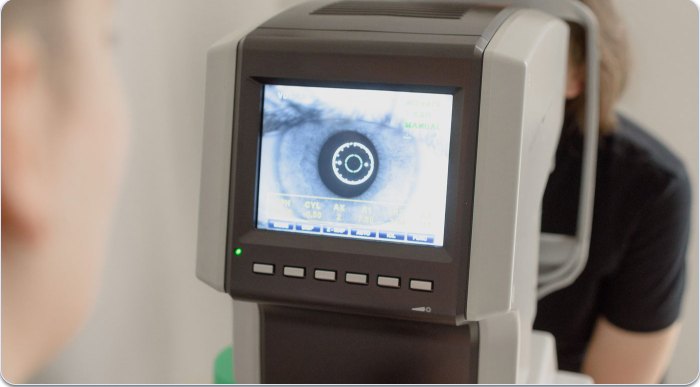
Autorefractor screen showing an eye during diagnostic testing
  • OCT (CPT 92133 and 92134). OCT of the optic nerve and OCT of the retina are separate codes. Each needs an order, an interpretation and report, and a diagnosis the payer policy accepts for the test.
  • Fundus Photography (CPT 92250) and Visual Fields (CPT 92081 to 92083). These tests are paid when the note shows why the test was needed and what it showed. Visual field level depends on the extent of testing performed, so the report must match the code billed.
  • Local Coverage Determinations. LCDs set diagnosis and frequency rules for many ophthalmic tests, and they differ by Medicare contractor. RCM Xpert checks the policy that applies to the practice before the test is billed.

Medical Plan, Vision Plan and Medicare Secondary Payer

Eye care services can fall under a medical plan or a vision plan, and the claim must go to the right one. Medical plans cover conditions such as cataract and glaucoma, vision plans cover routine exams and eyewear, and Medicare is billed only after other primary coverage is ruled out.

Medical plan versus vision plan billing
Plan TypeWhat It Pays ForWhat RCM Xpert Checks
Medical plan, including MedicareDiagnosis and treatment of eye disease, such as cataract, glaucoma and retinal diseaseMedical necessity, diagnosis, authorization and drug policy
Vision planRoutine eye exams, refraction and eyewearEye visit code requirement and frequency limits
Both on one patientEach plan pays only its own serviceThe visit goes to one plan, with the right code family

Before Medicare is billed, the practice must confirm that no other payer is primary, such as an employer group plan held by the patient or a spouse, workers’ compensation, or no-fault or liability coverage. RCM Xpert runs that screen at eligibility verification, so the claim is not rejected after the date of service.

Outsourced or In-House Ophthalmology Billing: What to Weigh

Outsource ophthalmology billing when coding complexity, denial follow-up or staff turnover is costing the practice more than a billing partner would. Keep it in-house when you have eye care coders, payer policy tracking and time to work every appeal.

Ophthalmologist at a diagnostic workstation reviewing patient notes

Six Signs an Eye Care Practice Is Ready to Outsource

  • Denials are sitting unworked because no one owns them.
  • One biller is the only person who knows when to use an eye visit code and when to use E/M.
  • Same-day visits with injections or minor procedures are being denied on modifier 25.
  • Co-managed cataract claims are paid to the wrong provider or rejected for missing dates.
  • Accounts receivable is aging with no payer follow-up schedule.
  • The practice is adding a provider, a location or an ASC and billing has to scale with it.

If two or more of these describe your practice, start with the Free Billing Audit. It reviews a sample of your recent eye care claims, so the decision to outsource rests on your own claims rather than on a sales pitch.

What the CY2027 Medicare Proposals Mean for Ophthalmology Billing

ASCRS reports that the CY2027 Physician Fee Schedule proposal would lower total allowed charges for ophthalmology by an estimated 3 percent, and would set Medicare payment for CPT 66984 at $444.34, a 4 percent reduction from 2026. These are proposals until the final rule is published.

Conversion Factor

$32.84 for non-qualifying APM participants and $33.17 for qualifying APM participants, down 1.68 percent and 1.19 percent. The temporary 2.5 percent increase in effect for 2026 expires.

Cataract Surgery

CPT 66984 would be paid $444.34, a 4 percent reduction.

Same-Day Services

When the same physician bills an office E/M and a 0-, 10- or 90-day global procedure on the same day, the highest-valued service is paid at 100 percent and each other same-day service at 50 percent.

Modifier 25 and Intravitreal Injections

CMS issued a request for information on how the modifier is used.

G2211

CMS proposes replacing the add-on code with a modifier appended to the E/M code, which ASCRS reports would raise E/M payment by 16 percent.

Status: proposed July 14, 2026. Comments closed September 14, 2026. CMS was expected to release the final rule around November 1, 2026. This section was last verified October 30, 2026.

For eye care, the same-day rule matters because visits and procedures share one encounter. Documentation that separates the visit from the procedure protects payment under either outcome.

Revenue Cycle Management

How RCM Xpert Bills an Ophthalmology Practice

RCM Xpert runs an ophthalmology practice through six steps: eligibility verification, charge entry and coding, claim scrubbing and submission, payment posting, denial follow-up and appeals, and reporting.

  1. 1

    Eligibility verification

    Medical and vision coverage, other primary payers and authorization or drug policy requirements are checked before the visit.

  2. 2

    Charge entry and coding

    The code family the note supports, laterality, global period and drug units are captured from the record.

  3. 3

    Claim scrubbing and submission

    Modifiers 25, 57, 54 and 55, NCCI edits and place of service are reviewed before the claim goes to the payer.

  4. 4

    Payment posting

    Payments are posted to the claim line, and underpayments and global package reductions are flagged.

  5. 5

    Denial follow-up and appeals

    Denials are worked by cause and CPT family, and appeals carry the supporting visit or operative note.

  6. 6

    Reporting

    The practice sees denials, adjustments and open claims by provider, payer and CPT family.

Standards RCM Xpert Bills To

Every code and payment fact on this page ties to a published source and carries a verification date. RCM Xpert works from CMS, the AMA CPT code set, NCCI edits, AAO and ASCRS coding guidance and Medicare contractor policy, and rechecks them when the rules change.

Calculator and stethoscope beside medication on a billing desk

What the Free Billing Audit Reviews

  • Eye visit code versus E/M selection on recent visits.
  • Cataract global package handling and co-management modifiers 54 and 55.
  • Injection claims, including modifier 25 and drug units.
  • Laterality on paired services and procedures.
  • Whether each claim went to the right medical or vision plan.
  • Denial patterns by CPT family and payer, with written findings you keep whether or not you work with RCM Xpert.
Common Questions

Ophthalmology Billing FAQs

What does an ophthalmology billing service do?

An ophthalmology billing service manages the revenue cycle for an eye care practice: eligibility verification, charge entry and coding, claim submission to medical and vision plans, payment posting, denial follow-up and patient billing. Two visit code families and two payer types set it apart from most specialties.

Should an eye exam be billed with an eye visit code or an E/M code?

Either family can be correct. Eye visit codes (92002 through 92014) fit documented ophthalmological exams and are often required by vision plans, while office E/M codes (99202 through 99215) fit medical visits and are often paid by medical carriers. The documentation and the payer plan decide, and one encounter is reported with one family.

Does Medicare pay for refraction and routine eye exams?

No. Medicare excludes refraction (CPT 92015) by statute and does not cover routine eye services such as eyeglasses and contact lenses. To obtain a denial for a secondary payer, the claim needs an executed Advance Beneficiary Notice and the GY modifier.

How is cataract surgery billed?

Routine cataract surgery with IOL insertion is reported with CPT 66984, and complex cases with 66982. The surgery carries a 90-day global package, so the surgeon's follow-up visits are included, and laterality (RT or LT) is reported on the surgery line.

How do co-managed cataract claims work?

The surgeon appends modifier 54 to report surgical care only, and the co-managing provider appends modifier 55 for post-operative management only. Medicare requires a written, dated transfer of care and patient consent, and the co-managing provider cannot bill until providing at least one service.

How is an intravitreal injection billed on the same day as an exam?

The injection is reported with CPT 67028, which has a 0-day global period, and the drug is billed on its own line with units. A same-day visit is reported with modifier 25 and needs documentation showing an exam beyond the decision to inject. CMS has issued a request for information on this combination.

What is the difference between billing a medical plan and a vision plan?

Medical plans, including Medicare, pay for diagnosing and treating eye disease such as cataract and glaucoma. Vision plans pay for routine exams, refraction and eyewear. The claim must go to the plan that covers the service, with the code family that plan requires.

How could the CY2027 Medicare proposals affect ophthalmology?

ASCRS reports an estimated 3 percent decrease in total allowed charges for ophthalmology and a proposed Medicare payment of $444.34 for CPT 66984, a 4 percent reduction from 2026. CMS also proposes paying the highest-valued same-day service at 100 percent and each other at 50 percent when a 0-, 10- or 90-day global procedure is involved. The final rule was expected around November 1, 2026.

Should an ophthalmology practice outsource billing or keep it in-house?

Outsource when denials sit unworked, one person holds all the visit code and modifier knowledge, co-managed claims are paying the wrong provider, or the practice is adding providers or locations. Keep it in-house when you have eye care coders, payer policy tracking and time to work every appeal.

What does the Free Billing Audit review for an ophthalmology practice?

The Free Billing Audit reviews a sample of recent ophthalmology claims for eye visit versus E/M selection, cataract global package handling, injection claims, modifier use, plan routing and denial patterns, and returns written findings to the practice.


Request a Free Billing Audit for Your Ophthalmology Practice

Tell us about your practice and RCM Xpert will review a sample of your recent eye care claims for visit code selection, cataract and injection coding, modifier use and plan routing. You get the findings in writing.

Or email info@rcmxpert.com.